Travel has a way of shaping taste, from the terraces of Tuscany to the breezy courtyards of the Caribbean. For those considering designing a storm resilient garden at your vacation home, the goal is to capture that sense of place while choosing materials and plantings that gracefully handle changing weather patterns. A garden retreat should feel indulgent and transportive yet grounded in its environment.
Across coastal escapes, mountain chalets, and island villas, thoughtful landscape planning elevates the travel experience. Beauty and durability coexist when design reflects local climate, soil, and seasonal rhythms, allowing the outdoor setting to complement architecture and frame sweeping views. The result is a retreat that welcomes guests with ease and refinement.
Reading the Landscape Before You Design
Every extraordinary garden begins with observation. Sun exposure, prevailing winds, soil composition, and drainage patterns shape the planting palette far more than passing trends. Travelers inspired by Mediterranean olive groves or tropical palms quickly discover that adaptation depends on selecting varieties suited to the destination rather than replicating another climate.
Wind deserves careful study in coastal or elevated regions, where layered planting can soften exposure without obstructing vistas. Plant taller trees to create shade, mid-height shrubs for filtering breezes, and lower perennials to add texture at ground level. Stone walls and pergolas further define space while contributing to subtle protection and architectural interest.
Designing for Microclimates Within the Property
Even within a single vacation home landscape, conditions can shift noticeably from one corner to another. A sunlit stone façade may radiate warmth well into the evening, while a shaded courtyard remains cool and moist throughout the day. Recognizing these microclimates allows for nuanced plant choices and a richer sensory experience.
Heat-loving herbs and flowering vines may flourish against reflective walls, while ferns or shade-tolerant blooms thrive beneath mature trees. Dividing the property into intentional garden rooms enhances resilience while introducing variety. Supporting a guest experience that is more about discovery than uniformity.
Plant Selection With a Sense of Place
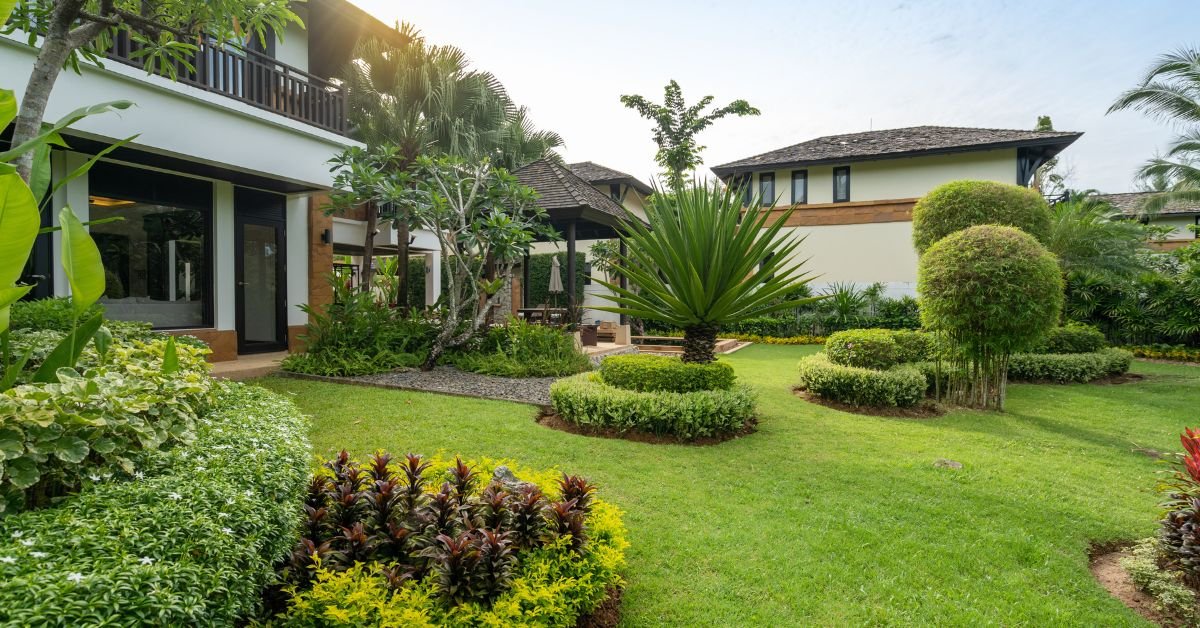
A luxurious garden feels rooted in its surroundings. Native and climate-adapted plants provide fragrance, color, and seasonal rhythm while thriving with less intervention. Varieties with flexible branches and strong root systems maintain their structure with grace, contributing to a layered and visually satisfying composition.
Consider integrating:
- Layered hedging plants that create privacy while softening wind movement
- Native flowering shrubs that provide color and habitat
- Trees with resilient branching patterns suited to regional conditions
- Permeable groundcovers that reduce runoff and support healthy soil
These choices support a storm resilient garden while preserving the harmony, allowing plantings to echo the broader landscape rather than compete with it.
Hardscaping That Blends Strength and Style
Terraces, pathways, and retaining walls shape your experience of the garden throughout the day. Natural stone, permeable pavers, and gravel surfaces allow water to move thoughtfully through the landscape instead of collecting near structures. Subtle grading and raised beds guide rainfall toward planted areas, nourishing roots while protecting foundations.
Outdoor kitchens, fire features, and shaded lounges turn a vacation property into an alfresco haven. Selecting materials rated for regional climate conditions and anchoring built elements securely supports longevity without sacrificing refinement. For example, teak furnishings, masonry seating walls, and powder-coated metals develop character as seasons pass.
Trees as Architectural Anchors
Mature trees lend gravitas to destination properties, framing views and offering cooling shade during warm afternoons. Their placement influences wind flow, privacy, and the overall sense of scale within the garden. Species selection should align with both aesthetic goals and environmental conditions.
Since they are such a presence, trees require knowledge into seasonal maintenance including post-storm tree clean-up. This means knowing how to evaluate everything from branches, managing debris, and supporting long-term tree vitality.
Soil Health and Drainage as Design Elements
Wellness begins beneath the surface, which means rich, well-structured soil encourages deep roots that anchor plantings naturally and promotes vigorous growth. To aid in this, use compost amendments and organic mulches to enhance fertility while contributing to a polished, finished appearance around beds and borders.
Drainage can become a visible feature rather than a hidden system. But you can use dry creek beds lined with smooth river stones, rain gardens filled with moisture-loving perennials, and gently contoured swales to weave water management into the aesthetic fabric of the property. Promoting visitors to admire the artistry without realizing the landscape supports resilience.
Creating Outdoor Rooms That Invite Lingering
Vacation homes thrive on atmosphere, and layered plantings help define intimate gathering spaces within expansive grounds. Use hedges, small trees, and climbing vines to create sheltered nooks for morning coffee or sunset wine tastings. Framed views and carefully positioned seating encourage everyone to pause and absorb their surroundings, maybe even create picture perfect spots for memorable, generational photos.
Swap out your outdoor pillows, light some lanterns, and refresh your potted plants to give the garden a new look without digging up a single shrub. These small additions let you change the vibe for a summer party or a quiet fall weekend while your stone walls and permanent trees keep the space feeling grounded. You get a garden that adapts to your plans without the constant work of a full renovation.
Lighting That Enhances Beauty and Stability
Outdoor lighting shapes the evening experience while reinforcing safety and structure. Light the space with low-voltage systems with well-secured fixtures that illuminate pathways and steps, creating an inviting ambiance.
Tuck warm-toned LEDs under stone seating walls or deep within planting beds to pull depth and dimension out of the shadows. Uplights aimed at your trees reveal textures and silhouettes that otherwise disappear at dusk, effectively extending the home’s reach into the landscape. Thoughtful illumination enhances usability without overwhelming the natural setting.
A Garden That Travels With You
Memories gathered abroad can influence your landscape without overpowering its local identity. Texture, scent, and layout evoke those journeys while respecting regional climate and terrain, and the balance between inspiration and practicality elevates long-term appeal.
Ultimately, designing a storm resilient garden at your vacation home becomes an exercise in thoughtful curation rather than compromise. When climate awareness informs plant selection, hardscape choices, and maintenance rhythms, the landscape evolves into a setting that feels worldly, welcoming, and prepared for changing conditions. Guests experience beauty and continuity, while the garden reflects its surroundings.
Image Credentials: By korakoch, #370644367