
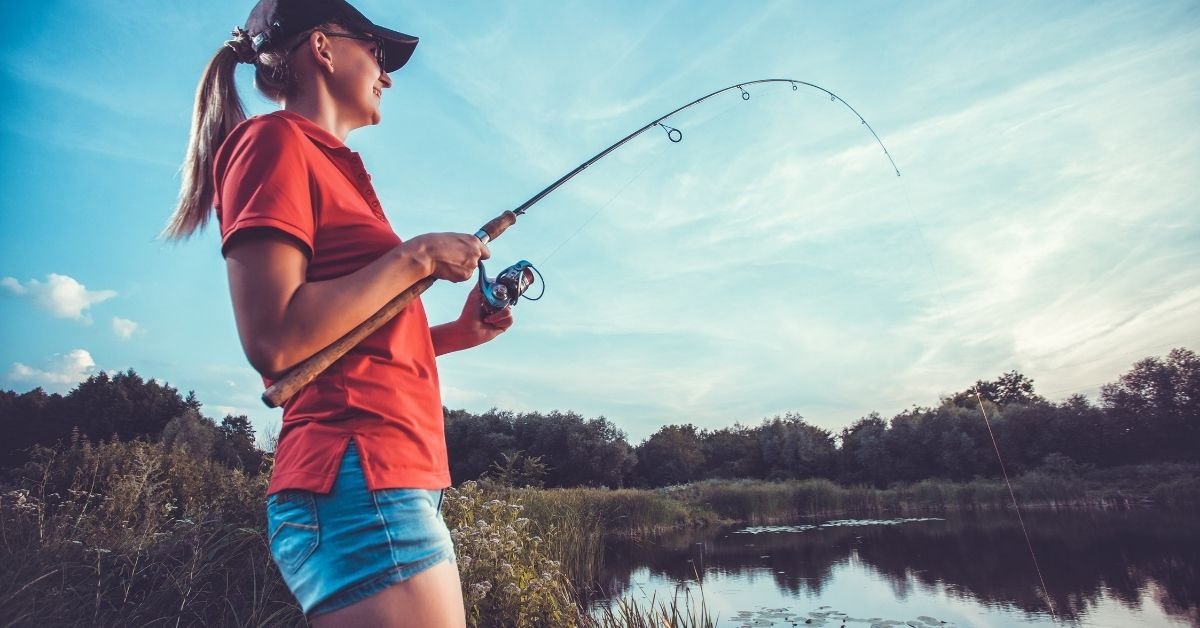
Interested in doing a bit of fishing? Though many people think getting into this sport requires a boat, expensive electronics, a truck, and prior experience, that’s not the case. You just need the right attitude and a few basics up your sleeves.
This guide provides practical tips so you can rig up, cast out, set the hook, and land your first fish. Let’s get you ready to have a great first time going fishing!
Get Your Papers in Order First
Before you can cast your line, you need a valid fishing license. Otherwise, the Game Warden can land you with a hefty fine.
Licenses are available online, at local bait shops, at big box stores like Walmart, or sometimes even at gas stations near the lake. The money you spend actually goes back into conservation, stocking programs, habitat restoration, and maintaining public access points, so it’s a win-win.
Keep Your Gear Super Simple
You might walk into the tackle shop and feel dizzy looking at the thousands of options. Ignore 90 percent of it. For your purposes, you can keep it simple. Plus, fishing gear has come a long way, and the entry-level stuff is honestly fantastic.
You’ll want a basic “spinning combo”; this is a rod and reel sold together that is already matched up perfectly. Look for a 6-to-7-foot rod with “medium power” (that’s the stiffness) and a reel spooled with 6- to 8-pound “monofilament” line.
You’ll also want to bring a pair of needle-nose pliers to remove hooks safely. Likewise, fish have slimy coats and sometimes sharp spines, so bring a rag or old towel to wipe your hands.
Master Just One Knot
You do not need to know 20 different nautical hitches to be a successful angler. We suggest learning just the “improved clinch knot” because it is strong, reliable, easy to tie, and works on almost any lure. Here are the steps:
- Thread the line through the eye of the hook.
- Wrap it around the main line five times.
- Put the end through the loop near the eye.
- Thread the end back through the big loop you just created.
- Pull it tight.
Pro Tip
Wet the line with a little spit before you pull it into the knot so the friction doesn’t weaken the line.
Buy Live Bait Instead of Lures
Nothing mimics real food better than actual food, so skip the plastic lures and grab a container of worms instead. Lures require you to trick the fish into biting by moving the rod in specific ways, whereas live bait does the work for you by wiggling around and smelling delicious. Additionally, live bait is cheaper, generally more effective, and requires less skill to use effectively. Just thread a worm on the hook and wait for the magic to happen.
Use a Bobber
A bobber (or float) is that little red and white plastic ball that floats on the water. It does two things: It suspends your bait at a specific depth so it doesn’t get snagged on the bottom, and it lets you know when you’ve hooked a catch. When a fish bites, the bobber will dance, sink, move sideways, or totally disappear.
This visual cue is huge for beginners because detecting a bite just by feeling the line takes a lot of practice. Moreover, using a bobber keeps your bait right in the fish’s face, keeps you out of the weeds, helps you track your location, and makes the whole experience more exciting.
Look for Structure and Cover in the Water
Fish do not typically swim around in the middle of nowhere; rather, they gravitate toward what we call “structure” and “cover.”
Structure refers to the physical features of the waterbed, such as drop-offs, ledges, humps, and channels—essentially, the underwater terrain that shapes their environment. Cover, on the other hand, includes objects like fallen trees, boat docks, large rocks, and weed edges that provide shelter and hiding spots. Structure gives fish a place to navigate and congregate, and cover offers them protection and opportunities to ambush prey.
To increase your chances of success, identify areas where structure and cover intersect. For instance, casting by submerged logs near a drop-off or the pylons of a pier along a channel can significantly boost your odds of hooking a fish.
Learn the Drag System
Your reel has a knob on top (or back) that controls the drag. This is basically a brake system that allows the reel to let out line if a fish pulls really hard, preventing the line from snapping. Before you cast, pull on your line with your hand; it should come out with some resistance but not feel locked solid. If the drag is too loose, you won’t be able to set the hook; if it is too tight, a big fish will break your line instantly.
Be Okay With Getting Skunked
Getting “skunked” means you went fishing and didn’t catch a single thing. It happens to the pros, it happens to old-timers, it happens to guides, and it will happen to you. Do not let it discourage you!
After all, patience is the most important piece of tackle in your box. If you aren’t catching anything, try moving to a new spot, changing your bait, adjusting your depth, or just enjoying the view. Ultimately, a bad day fishing is still better than a good day at work.
Reeling It All In
Getting into fishing is one of the best moves you can make for your mental health and your weekends. Hopefully, we’ve shown that you do not need to be an expert or have experienced anglers as friends to enjoy the thrill of the hunt. By following these tips, you can have a great first time going fishing.
Eventually, you’ll get good enough to start improving your gear, refining your technique, and reeling in bigger and better catches. Or if fishing remains a low-key weekend hobby for you, that’s okay too. The main goal every time should be to simply have fun. Now get out there and go cast some lines!
Feature photo by Dmytro Titov courtesy of AdobeStock