
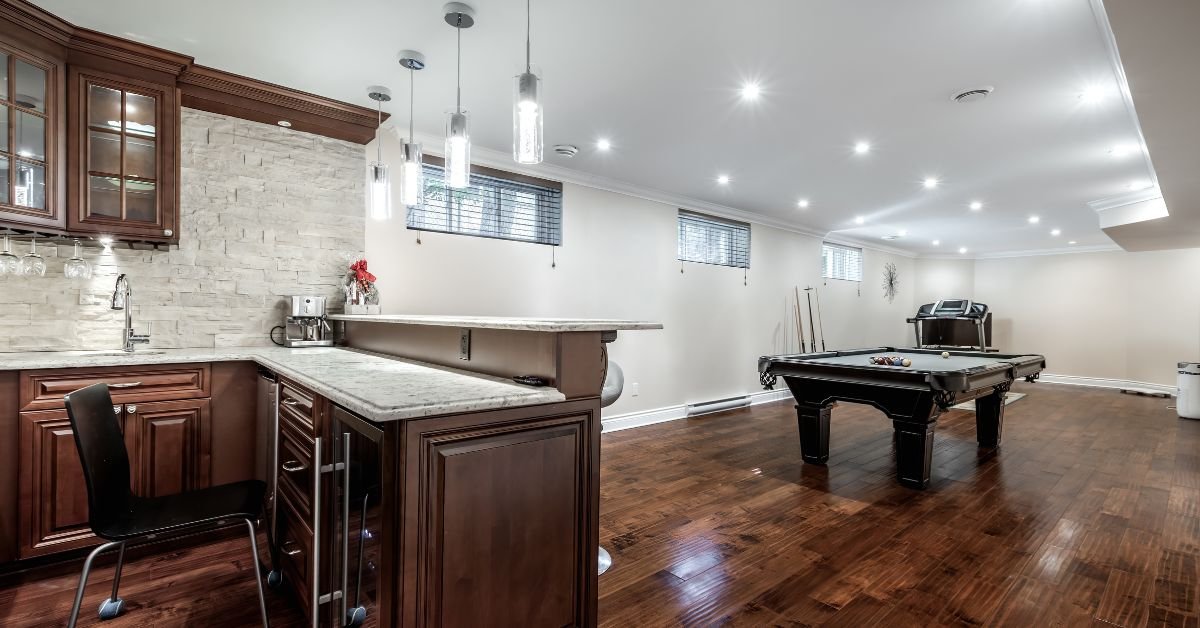
A finished basement can reshape the way a home lives. It can become a guest retreat, a media room, a quiet office, a fitness area, or a polished extension of daily life. The best results come from planning the space as carefully as any main-floor renovation. Before walls go up or flooring goes down, homeowners must think through moisture, comfort, code requirements, and the way the room will function through every season.
If you’re considering finishing your home’s basement, there are many important aspects to consider first. Keep reading to understand the major factors of a basement finish, from moisture control to illumination, ventilation, and more.
Start With Moisture Control
The priority when finishing a home’s basement is controlling moisture. A lower level sits closer to the surrounding soil, which means water intrusion, damp air, and condensation can affect finishes more quickly than in upstairs rooms. Basement water leakage commonly comes through holes, cracks, and porous materials, so a comfortable, energy-efficient basement depends on both insulation and proper moisture control. The department also warns that adding insulation without solving moisture issues can hide larger problems inside the wall assembly.
That makes early inspection essential. Look for staining, musty smells, peeling paint, visible cracks, and signs of past seepage before choosing finishes. Homeowners who address grading, drainage, sealing, and waterproofing at the start protect the investment they make in framing, flooring, and millwork. A basement can feel luxurious, but it must stay dry first.
Plan the Layout Around Real Use
A successful basement does more than add square footage. It supports the way people actually live. That means deciding whether the space will serve as a lounge, home office, gym, guest suite, playroom, or a flexible mix of uses. Once the purpose is clear, the design choices become easier. Traffic flow, storage, sound control, and furniture placement all come into focus when the room has a defined role.
One of the biggest decisions you’ll need to make for your basement project is whether you want to add a bathroom. For households that entertain, host overnight guests, or want a more self-contained lower level, a bathroom can make the space far more practical. However, there’s much to know about adding a bathroom to your basement, as it could mean major changes to plumbing, layout, and construction sequencing. Carefully weigh the pros and cons of this decision before you begin to avoid headaches as you approach construction work.
Think About Comfort in Every Season
Basements need a different comfort strategy than above-grade rooms. In many homes, basements are one of the biggest areas of heat loss in the house, so durable insulation systems, continuous air sealing, and a clear thermal barrier are all musts for a finished basement. All insulated basement walls should include a sealed air barrier and, if you’re using foam insulation, a code-compliant thermal barrier such as gypsum board.
These details matter because they influence how the room feels every day. A basement with smart insulation and air sealing feels less chilly, supports more stable temperatures, and places less strain on heating and cooling systems. Homeowners notice that difference immediately in spaces meant for movies, workouts, hobbies, or long workdays.
Prioritize Ventilation and Indoor Air Quality
One of the most important aspects of finishing your home’s basement is ventilation and air quality. The basement should be part of the home’s ventilation strategy, and homeowners must watch for signs of inadequate ventilation, such as stale air, condensation on cold surfaces, and mold or mildew growth. Homeowners should also test for radon before remodeling because the basement or ground floor is usually the best place to start, and mitigation is easier before you complete the renovation. If your tests find that radon levels in the basement are at or above 4 pCi/L, you should take immediate action for the safety of the household.
Ventilation and air quality are functional necessities, and they also affect the design and layout of the space. A basement should feel fresh, not sealed off. Thoughtful airflow, dehumidification where necessary, and low-emission materials can help create a calmer, cleaner environment for lounging, sleeping, or exercising. For homes that use the basement as a guest space, that comfort becomes even more important.
Bring in Better Light
Lighting changes the entire mood of a basement. Since many lower levels receive limited daylight, a layered lighting plan carries more weight here than in almost any other room. Recessed lighting can create an open feel, sconces or table lamps can soften the atmosphere, and task lighting can define work zones or reading corners. Basements that balance ambient, accent, and task lighting feel more intentional and less like leftover space.
Natural light still matters where possible. If the design includes larger windows, a walkout opening, or a bedroom area, that decision can improve the feel of the room while also supporting code and safety goals for egress and habitable spaces. Local building departments and adopted codes govern the exact requirements, so plans should always match local rules before construction begins.
Build With Safety and Code in Mind
Code planning should shape the project from day one, not show up at the permit counter. Smoke alarms are a requirement for any finished basement, and the space also needs a carbon monoxide alarm if the home is attached to a garage or has fuel-fired appliances. There are also further safety codes and requirements for the sleeping rooms, egress, light, and ventilation of the finished basement.
That matters even more when a basement includes a guest room or bedroom. Emergency escape, alarm placement, and ventilation requirements are not design extras. They are part of making the space safe, legal, and comfortable. A beautiful renovation should never need major revisions because the early planning missed the basics.
Choose the Right Contractor and Scope
Reliable project management is the final piece in finishing a basement. Homeowners should only work with licensed and insured companies, get multiple written estimates, and review a written contract before work starts. Those steps protect the budget and reduce the chance of costly surprises midway through the renovation.
A strong contractor also helps sequence the project correctly. Moisture fixes, insulation, framing, electrical work, plumbing, ventilation, and finish materials all need to happen in the right order. When the plan is thoughtful, the basement feels integrated with the rest of the home rather than treated like an afterthought.
The Best Finished Basements Feel Intentional
The most successful basement projects combine practicality with atmosphere. They stay dry, feel comfortable, meet code, support healthy air quality, and reflect the way the household wants to live. When those pieces come together, a basement stops feeling secondary and becomes one of the most versatile and inviting parts of the home.
Image Credentials: by Anatoli, #1815321808